
The Divine Liturgy, a cornerstone of Orthodox worship, is increasingly available in bilingual Greek and English editions.
These resources, like those from Holy Cross Press, facilitate deeper engagement with the ancient texts and traditions.
Exploring parallel texts enhances understanding for both scholars and faithful participants in the sacred service.
Historical Context of the Liturgy
The Divine Liturgy’s roots stretch back to the early Church, evolving from practices described in the New Testament and the writings of the Church Fathers. Initially celebrated in Greek, the Liturgy reflects the theological and cultural milieu of the Byzantine Empire.
Over centuries, various liturgical forms developed, notably those attributed to St. John Chrysostom and St. Basil the Great.
The need for translation arose as the Orthodox faith spread beyond Greek-speaking regions.
The availability of parallel Greek-English texts, such as those published by the Greek Orthodox Archdiocese of America and the Thyateira and Great Britain edition, represents a significant step in making these ancient prayers accessible to a wider audience.
These bilingual editions allow for a deeper appreciation of the Liturgy’s historical development and theological richness.
Significance of Greek and English Translations
Greek, as the original language of the New Testament and the early Church, holds immense significance for understanding the nuances of the Divine Liturgy. Access to the Greek text allows for a more precise theological interpretation and appreciation of the Liturgy’s poetic beauty.
However, English translations are crucial for contemporary worship and accessibility.
Bilingual editions, like those from Holy Cross Press, bridge this gap, enabling faithful to engage with the Liturgy on multiple levels.
Parallel texts facilitate comparative study, allowing worshippers to trace the origins of phrases and concepts.
Resources like those found on WordReference Forums encourage collaborative parallelization, fostering a deeper communal understanding of this sacred service.
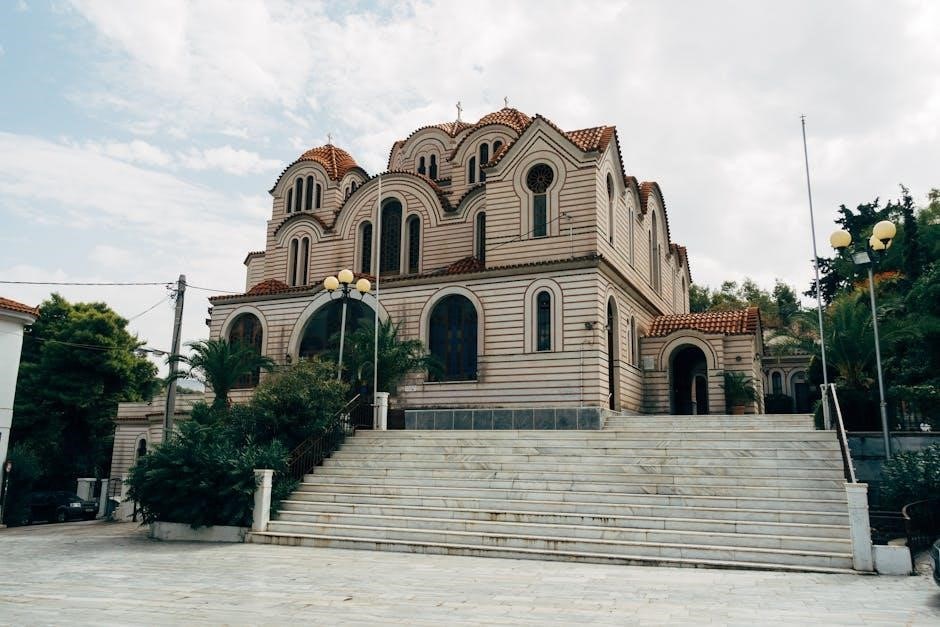
The Divine Liturgy of St. John Chrysostom
St. John Chrysostom’s Liturgy is the most frequently celebrated Divine Liturgy, with complete bilingual guides available for enhanced understanding and participation.
Overview of the Chrysostom Liturgy
The Divine Liturgy of St. John Chrysostom represents the most commonly experienced liturgical service within the Orthodox Christian tradition. Its structure is deeply symbolic, unfolding as a sacred drama of worship and communion with God. A complete guide, readily available, assists in navigating each step of this profound service.
The Liturgy progresses through a series of hymns, prayers, scripture readings, and ceremonial actions, all designed to elevate the faithful towards a mystical encounter with the Divine. Resources like those published by Holy Cross Press offer invaluable bilingual editions – presenting the original Greek alongside accurate English translations.
This allows for a richer, more nuanced understanding of the liturgical texts. Furthermore, supplemental prayer books and Psalters complement the Liturgy, enriching personal devotion and study. The Chrysostom Liturgy’s enduring popularity stems from its theological depth and its capacity to draw worshippers into the heart of the Christian faith.
Availability of Greek-English Editions (Holy Cross Press)
Holy Cross Orthodox Press stands as a premier source for bilingual liturgical texts, including the Divine Liturgy of St. Basil the Great and St. John Chrysostom. They actively provide resources facilitating deeper engagement with the Church’s liturgical treasures. Their commitment to accuracy and accessibility makes these editions invaluable for both clergy and laity.
These volumes present the original Greek text alongside a new, carefully crafted English translation, enabling comparative study and a more profound understanding of the service’s theological richness.
Availability extends to various formats, ensuring accessibility for diverse needs. Exploring their catalog reveals a dedication to preserving and promoting the Orthodox liturgical heritage, offering essential tools for worship and spiritual growth. These editions are often considered standard resources within many Orthodox parishes.
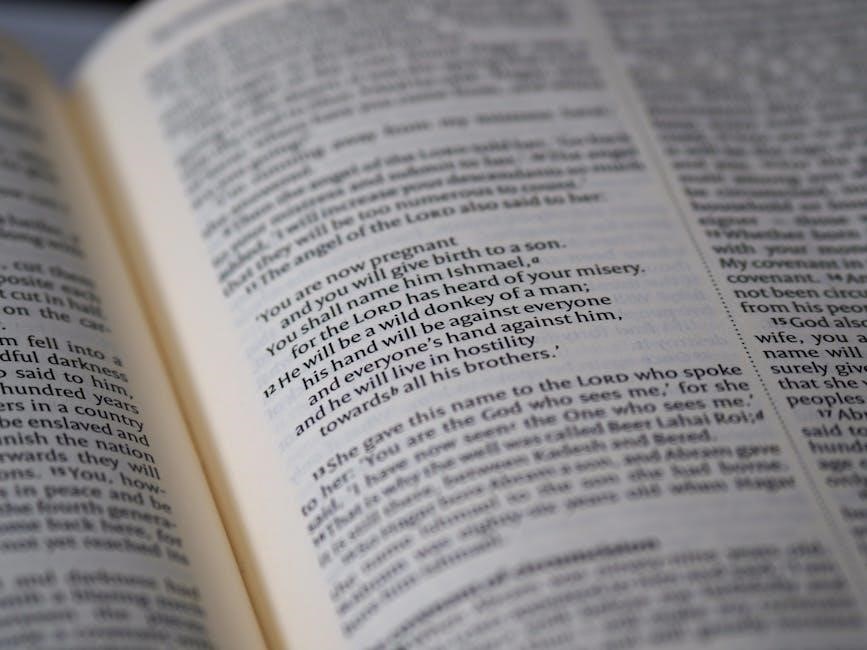
Step-by-Step Guide Resources
Navigating the Divine Liturgy can be greatly aided by comprehensive, step-by-step guides. Resources like “A Complete Guide to The Divine Liturgy” by Alexander Egger, available on Amazon, offer detailed explanations of each component. These guides often complement bilingual texts, clarifying the meaning and sequence of prayers and hymns.
Furthermore, resources such as “Orthodox Christian Prayer Book” by Michael Monos, and “The Ancient Faith Psalter” by the Monks of the Orthodox Church, provide supplementary materials for deeper understanding;
Online forums, like WordReference, also offer collaborative efforts to parallelize Greek and English texts, assisting individuals in tracing the connections between the original language and its translation. These resources empower faithful participation and enhance appreciation for the Liturgy’s beauty.
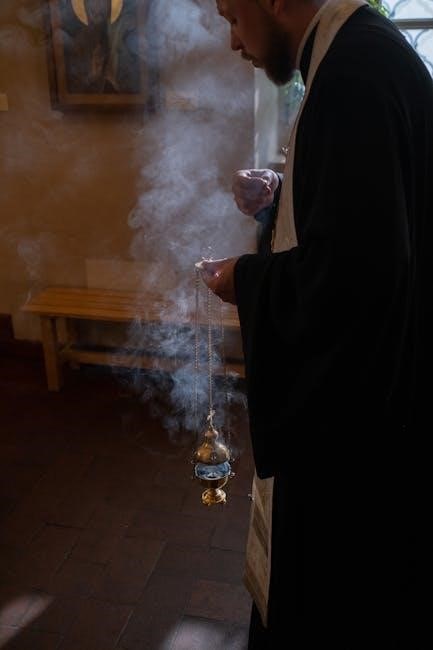
The Divine Liturgy of St. Basil the Great
St. Basil’s Liturgy, offered by Holy Cross Press, is typically celebrated ten times yearly, featuring bilingual Greek and English texts for enhanced understanding.
When is the Basil Liturgy Celebrated?
The Divine Liturgy of St. Basil the Great holds a special place within the Orthodox liturgical calendar, celebrated approximately ten times annually. These occasions are specifically tied to significant feast days and periods of spiritual preparation.
Notably, it is observed on January 1st, the feast day honoring St. Basil himself. Throughout the five Sundays of Great Lent, the Basil Liturgy provides a distinct spiritual tone.
Furthermore, it is traditionally served on the eve of Christmas and Theophany, enriching these pivotal celebrations. When these feasts fall on a Sunday or Monday, the Basil Liturgy is preferred.
Additionally, it is uniquely appointed for the solemn services of Holy Thursday and Holy Saturday, completing its cycle of annual observance, often available in Greek-English editions.
Bilingual Editions of the Basil Liturgy
Holy Cross Orthodox Press proudly offers a bilingual edition of the Divine Liturgy of St. Basil the Great, presenting the original Greek text alongside a new, carefully crafted English translation. This volume joins a growing series dedicated to making the liturgical treasures of the Greek Orthodox Church accessible to a wider audience.
Beyond Holy Cross Press, the Greek Orthodox Archdiocese of Thyateira and Great Britain also publishes a parallel Greek and English edition, conveniently formatted in paperback.
These bilingual resources are invaluable for those seeking a deeper understanding of the Liturgy’s theological richness and historical context. They facilitate comparative study, allowing worshippers to appreciate the nuances of both languages and enhance their participation in the divine services.
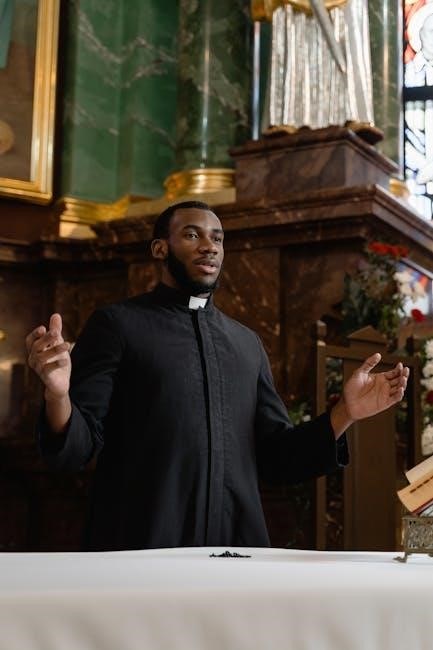
Comparison of Chrysostom and Basil Liturgies
While both Liturgies—those of St. John Chrysostom and St. Basil the Great—share the fundamental structure of the Divine Liturgy, distinct differences exist in their length and emphasis. The Chrysostom Liturgy, generally celebrated most Sundays, is comparatively shorter and more frequently used throughout the year.
Conversely, the Basil Liturgy, typically celebrated ten times annually—including specific feasts like St. Basil’s Day, during Lent, and on Christmas Eve/Theophany—is more expansive and solemn.
Bilingual editions, offering both Greek and English texts, allow for a detailed comparative study of the subtle yet significant variations in prayers and hymns, enriching one’s understanding of the Orthodox liturgical tradition and its diverse expressions of worship.
Finding Parallel Greek and English Texts
Resources from the Greek Orthodox Archdiocese and Thyateira & Great Britain offer parallel Greek-English liturgical texts in accessible formats.
Online forums also aid in text parallelization.
Resources from the Greek Orthodox Archdiocese
The Greek Orthodox Archdiocese of America, through its Holy Cross Orthodox Press, stands as a primary source for bilingual liturgical materials. They proudly present the Divine Liturgy of St. Basil the Great, typically celebrated ten times annually – including January 1st, during Lent, and on the eves of major feasts.
This volume is part of a series offering original Greek alongside a fresh English translation, aiming to unlock the liturgical treasures of the Church. These publications are designed to aid both scholarly study and devout participation in the Divine Services.
Accessing these resources directly from the Archdiocese ensures authenticity and supports the ongoing work of preserving and disseminating Orthodox Christian tradition. Exploring their catalog provides a valuable pathway to deeper liturgical understanding.
Thyateira and Great Britain Edition
The Greek Orthodox Archdiocese of Thyateira and Great Britain also offers a valuable parallel Greek and English edition of the Divine Liturgy. This edition is noted for its convenient paperback format, making it readily accessible for personal use and study during services.
Online discussions, such as those found on WordReference Forums, highlight the usefulness of this resource. Users suggest pairing the English translation with the original Greek text for a more comprehensive understanding.
While the English translation is considered good, the parallelization with the Greek is key to unlocking the nuances of the liturgical language. This edition provides a practical tool for those seeking a deeper connection to the ancient worship tradition.
Utilizing Online Forums for Parallelization
Online forums, like WordReference Forums, provide a collaborative space for individuals seeking to create parallel Greek and English texts of the Divine Liturgy. Users share insights and assistance in aligning the translations with the original Greek phrasing.
The process involves identifying the corresponding lines in each language, a task that can be simplified with guidance from experienced members; Some forums even offer to facilitate this parallelization step-by-step, fostering a community-driven approach to liturgical study.
This method proves particularly helpful when working with existing English translations, allowing users to deepen their understanding by directly comparing them to the source Greek text. It’s a dynamic way to engage with the liturgy.

Key Components of the Liturgy
Essential liturgical elements, such as the Small Entrance, Prokeimenon, and Gospel reading, are central to the Divine Liturgy’s structure and spiritual significance.
The Small Entrance
The Small Entrance, a solemn procession within the temple, marks a pivotal moment in the Divine Liturgy. During this procession, the deacon, or priest, carries the Gospel Book, symbolizing Christ’s presence and the proclamation of His teachings.
This entrance prepares the faithful to receive the Word of God, setting a reverent tone for the upcoming readings.
In bilingual Greek-English editions, the accompanying prayers and hymns are presented side-by-side, allowing worshippers to follow both the original Greek and the English translation.
Understanding the symbolism and textual nuances of the Small Entrance, through parallel texts, deepens one’s appreciation for the richness of Orthodox liturgical tradition and its enduring spiritual power.
The Prokeimenon
The Prokeimenon, a psalm verse sung or chanted, immediately follows the Small Entrance and holds significant theological weight. It’s a selection from the Psalms, chosen to reflect the liturgical theme of the day, and is repeated with a refrain.
The cantor’s melodic delivery emphasizes the verse’s meaning, preparing the congregation for the Gospel reading.
Bilingual Greek-English liturgical texts are invaluable here, allowing worshippers to appreciate the poetic beauty of the original Greek Psalter alongside a clear English rendering.
Parallel texts facilitate a deeper understanding of the Prokeimenon’s scriptural context and its connection to the broader liturgical narrative, enriching the spiritual experience for all.
The Gospel Reading
The Gospel Reading represents the heart of the Divine Liturgy, proclaiming the Good News of Jesus Christ. It’s proclaimed by a priest or bishop, often from a raised platform, signifying the authority of the Word of God.
The selection varies according to the liturgical cycle and feast day, offering a continuous unfolding of salvation history.
Having access to parallel Greek and English Gospel texts is profoundly beneficial. It allows for a nuanced understanding of the original Greek phrasing and its theological implications, alongside a readily accessible English translation;
This dual access deepens engagement with the scriptures and fosters a more profound connection to the divine message being conveyed.
Specific Texts and Translations
Canellopoulos’ translation of St. John Chrysostom’s Liturgy is widely available, including editions on Amazon, alongside prayer books and Psalters.
These resources offer valuable bilingual access.
Canellopoulos’ Translation of St. John Chrysostom
C.C. Canellopoulos’ translation of the Divine Liturgy of St. John Chrysostom stands as a significant contribution to bilingual liturgical study and practice.
Published as “The Divine Liturgy Of St. John Chrysostom: The Greek Text With The English Translation,” this work provides a direct comparison between the original Greek and its English rendering.
Available through platforms like Amazon.com (ISBN: 9781436681377), it’s a valuable resource for those seeking a deeper understanding of the Liturgy’s nuances.
This edition facilitates a more informed participation in the Divine Liturgy, allowing worshippers to appreciate the historical and theological depth of the service.
It’s particularly useful for individuals learning Koine Greek or those desiring a closer connection to the liturgical texts.
Availability on Amazon
Amazon.com serves as a convenient marketplace for acquiring bilingual Divine Liturgy texts, catering to diverse liturgical needs.
Several editions are readily available, including “The Divine Liturgy (English and Greek Edition)” from Hellenic College, Holy Cross Greek Orthodox School of Theology (ISBN: 9780917651151).
Furthermore, Canellopoulos’ translation of St. John Chrysostom’s Liturgy (“The Divine Liturgy Of St. John Chrysostom,” ISBN: 9781436681377) is also accessible.
Alongside these, supplemental resources like “A Complete Guide to The Divine Liturgy” by Alexander Egger and Orthodox Christian Prayer Books by Michael Monos can be found.
These offerings provide a comprehensive selection for individuals and parishes seeking to deepen their engagement with the liturgical tradition in both Greek and English.
Other Relevant Prayer Books & Psalters
Complementary to the Divine Liturgy texts, several prayer books and Psalters enhance the overall liturgical experience and personal devotion.
“Orthodox Christian Prayer Book” by Michael Monos, available in hardcover, provides a collection of prayers for various occasions, supporting daily spiritual life.
“The Ancient Faith Psalter,” compiled by the Monks of the Orthodox Church in paperback format, offers a complete Psalter for both private and communal use.
These resources, often found alongside Liturgy editions on platforms like Amazon, facilitate a deeper immersion into the Orthodox Christian tradition.
They serve as valuable tools for understanding and participating fully in the Divine Liturgy and broader liturgical cycle, enriching one’s faith journey.

Understanding Bilingual Liturgical Texts
Bilingual editions bridge the gap between the original Greek and English, offering richer comprehension.
Accessing both languages deepens appreciation for the Liturgy’s historical and theological nuances.
Importance of Original Greek
The original Greek text of the Divine Liturgy holds paramount importance for several reasons. It represents the authentic expression of the Church Fathers’ theology and spiritual insights, directly reflecting the historical context in which the Liturgy developed.
Translations, while valuable for accessibility, inevitably involve interpretation and can subtly shift meaning. Studying the Greek allows for a more direct encounter with the liturgical tradition, minimizing the potential for interpretive drift.
Furthermore, many liturgical nuances and poetic elements are deeply rooted in the Greek language and are difficult to fully convey in translation. Understanding the Greek grammar and vocabulary unlocks a deeper appreciation for the Liturgy’s beauty and precision. Access to parallel Greek-English texts, such as those offered by the Greek Orthodox Archdiocese, empowers individuals to engage with the Liturgy on a more profound level, fostering a richer spiritual experience.
Benefits of English Translation
English translations of the Divine Liturgy are crucial for the participation and understanding of faithful who are not proficient in Greek. They bridge a linguistic gap, making the profound spiritual wealth of the Liturgy accessible to a wider audience, fostering deeper engagement in worship.
Accurate translations, like those found in bilingual editions from Holy Cross Press, allow congregants to follow the service more closely and internalize its meaning. This accessibility encourages active participation, moving beyond mere observation to heartfelt communion with God.
Moreover, English translations facilitate liturgical study and theological reflection, enabling individuals to explore the richness of Orthodox tradition. Resources like those available on Amazon and through online forums support this exploration, enriching the spiritual lives of many.
Navigating Parallel Texts
Parallel Greek and English texts require a deliberate approach to maximize their benefit. Begin by identifying corresponding phrases or sentences, utilizing resources like those discussed on WordReference Forums where users collaboratively “parallelize” texts. Focusing on the initial words of Greek lines can be a helpful starting point.
Comparing the nuances between the original Greek and the English translation reveals layers of meaning often lost in single-language editions. This practice deepens understanding of the Liturgy’s theological depth and historical context.
Editions from the Greek Orthodox Archdiocese of Thyateira and Great Britain offer convenient paperback formats for this comparative study. Careful navigation unlocks a richer, more informed experience of the Divine Liturgy.